


* Review of relevant project documentation
* On site inspection of the various building cladding types
* Produce Fire Risk Assessment External Walls (FRAEW) in accordance with PAS 9980 guidelines
Find out more

On this page
Cracks, leaks or loose panels can raise concerns about a building’s cladding, but the cause and seriousness are not always obvious. Some cladding defects can be addressed through maintenance or local repairs, while others point to problems with how the system was designed or installed, so treating the visible damage alone may not prevent them from returning.
This guide explains the common signs of cladding defects, what can cause them and how an independent investigation can establish what needs attention and what should happen next.
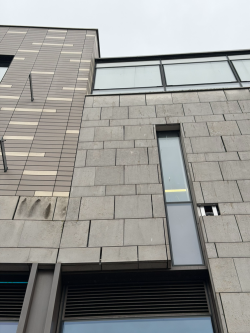
A cladding defect is a fault in the materials, design or installation of a cladding system, or damage that develops over time. It can affect the building’s appearance, weather resistance, insulation or safety.
The fault may involve the outer panels, the fixings and supports behind them or other concealed components. Defects can also occur where cladding meets windows, roofs or other parts of the building.
Some are visible, such as cracked panels or open joints. Others remain hidden behind the cladding and may only become apparent through leaks or other recurring problems. A specialist cladding and façade inspection can help establish what is wrong and whether further investigation is needed.
Changes in appearance, movement or water entering the building can all indicate a problem.
Cracks may affect individual panels or appear across several areas of the cladding. Their location, pattern and extent help establish whether the damage is isolated or part of a wider problem.
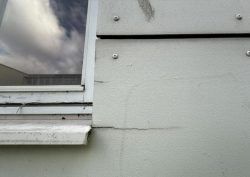
Panels may appear bowed, sit unevenly or move noticeably. These changes warrant investigation, particularly if they are getting worse. If a panel appears at risk of falling, consult a cladding or façade professional immediately.
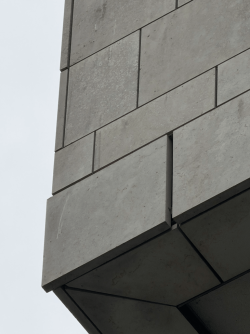
Leaks or damp patches may result from defective joints, seals, flashings, ventilation or drainage, particularly around windows and roof junctions. Water can travel within the wall before appearing inside, so the source may be some distance from the visible damp patch.
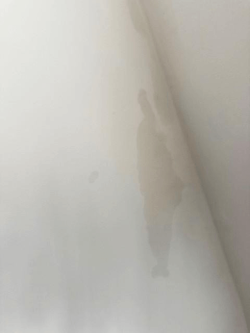
Corrosion may affect metal panels, fixings or the supporting framework. Rust might be superficial, but it can also be a sign of a weakened fixing, so a closer inspection is needed to establish how serious it is. Rust staining can also originate from concealed components.
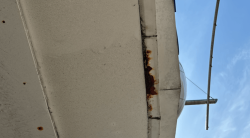
Sealants have a typical service life of 5-10 years, and sealant that has cracked, split or pulled away from a surface can leave gaps where water and wind can enter. Simply adding more sealant is unlikely to fix the underlying fault – the joint itself needs closer investigation.
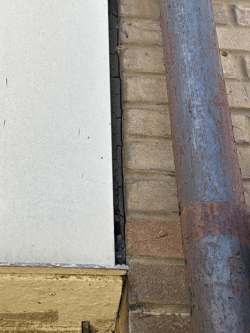
Staining and discolouration can result from pollution, biological growth, corrosion, defective protective coating or water repeatedly running over the surface. Damaged panels, missing trims or open joints may also affect how the cladding performs. An inspection can help determine whether the issue is cosmetic or requires repair.
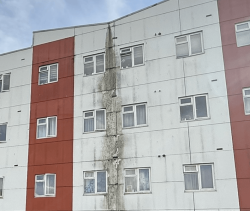
Cladding defects can originate during design or installation, develop as materials age or result from later work on the building. Sometimes several factors contribute to the same problem.
Involving a façade consultant during design and installation can help identify unsuitable details, check how adjoining elements connect and address potential problems before they are built into the façade.
The seriousness of a cladding defect depends on what has gone wrong, how widespread it is and whether it is getting worse. Surface staining may only affect appearance, while persistent leaks can damage insulation, internal finishes and other parts of the building. Defective fixings or supports may put panels at risk of falling.
Some concealed defects, such as incorrectly installed cavity barriers, can also affect fire safety without producing obvious external signs. An inspection can help establish which issues need urgent attention and which can be addressed through planned repairs or maintenance.
Recording what you have noticed and gathering information about the building can help a consultant investigate the problem.
Take photographs from a safe location and note where and when the problem occurs. For leaks, record whether they happen during particular weather conditions or have returned after repairs.
Drawings, previous inspection reports, maintenance records and details of earlier repairs can help explain how the cladding was constructed and what has changed. You can still arrange an inspection if this information is missing.
Share your observations with a façade consultant, who can advise on the scope of the inspection and any access needed.
Avoid disturbing loose panels or attempting to open up the cladding yourself. If you suspect an immediate safety risk, seek urgent advice rather than waiting to gather all the records.
The consultant reviews the building’s construction, the history of the problem and any available drawings, reports or repair records. This helps identify where to focus the inspection and what needs to be checked.
The inspection examines panels, joints, visible fixings and areas where the cladding meets windows, roofs and other building elements.
The consultant looks for patterns, such as faults repeated across several elevations or leaks concentrated around a particular window detail. These can help establish whether the problem is isolated or linked to a wider design or installation issue.
Where a visual inspection cannot establish the cause, targeted opening-up may be needed to examine concealed components. Water testing or other specialist testing may also help answer specific questions. The consultant recommends these investigations where needed.
The report sets out the defects identified, supporting evidence, likely causes and recommended action. It should explain which issues take priority and where further investigation is needed before repairs can be specified.
The findings help determine whether the cladding needs maintenance, local repairs or more extensive remedial work.
The priority is to address the cause of the defect, so, depending on the findings, this could mean correcting a window detail, replacing defective fixings or repairing damaged panels. An independent report also gives owners, residents and managers evidence to support discussions with the developer or contractor.
Where remedial work is required, independent quality checks can help verify that defects have been addressed, including checking concealed components before they are covered.
When persistent leaks continued at a residential development in Felixstowe despite previous repairs and ongoing replacement works, Barry Jubb Associates was called in to identify the cause. Our investigation revealed widespread installation defects affecting the cladding, supports, windows and cavity barriers, even though the materials used were suitable. We provided the resident with independent evidence and recommendations to support discussions with the developer and contractor.
Read about our cladding defect investigation in Felixstowe.
In addition to the cladding itself being combustible, some cladding defects can affect how fire spreads through or over an external wall. Missing or incorrectly installed cavity barriers, defective fire stopping and poorly detailed junctions may compromise the protection the wall is intended to provide.
These problems can be concealed behind the cladding. A building’s appearance alone therefore cannot establish whether its external walls are safe. Equally, a crack or leak does not automatically indicate a fire-safety issue.
Where concerns arise, a Fire Risk Appraisal of External Walls (FRAEW), carried out by a competent professional using PAS 9980, may be needed to assess the risk and recommend appropriate action.
The government’s remediation plan for England sets a 2029 target for unsafe cladding: buildings over 18 metres in government-funded schemes should be remediated, while those between 11 and 18 metres should be remediated or have a completion date agreed. These targets concern unsafe cladding, rather than every type of cladding defect. www.gov.uk
Funding may be available for qualifying cladding fire-safety risks under the Cladding Safety Scheme, subject to eligibility requirements. Building owners and managers should check current government guidance, as application dates and scheme requirements can change.
Whether you have noticed a new problem or previous repairs have failed to resolve it, Barry Jubb Associates can investigate the cause and recommend appropriate next steps.
To discuss a cladding inspection, contact our team with details of your building, the problems you have noticed and any previous work.
Cracks alone do not establish whether the cladding is unsafe, some cracks are isolated damage, while others indicate movement or a wider problem. Their location, size and whether they are getting worse help determine how serious they are.
Water could be entering through defective seals, joints, flashings or poorly detailed connections around windows and roofs. It can travel within the wall before appearing inside, so the source may not be directly behind the damp patch.
Not always, sometimes local repairs or replacement of individual components is sufficient. However, where defects are widespread, more extensive cladding remediation may be needed. The appropriate response depends on the investigation findings.
A façade consultant with experience of the relevant cladding system can investigate defects and recommend appropriate action. Depending on the findings, further input from a structural engineer, fire engineer or other specialist may be needed.
This depends on the building’s size, access arrangements and the scope of the investigation. Opening-up or specialist testing may require additional visits. The consultant can advise on timescales once the requirements are understood.
Yes. Suitable materials can still develop problems if the design or installation is defective. Some faults become apparent soon after completion, while others emerge over time.
Repeated leaks may mean earlier repairs have not addressed the underlying cause. An independent investigation can review previous work and trace how water is entering before further repairs are specified.















©2021 Barry Jubb Associates. All Rights Reserved | Made by JKE Web Design