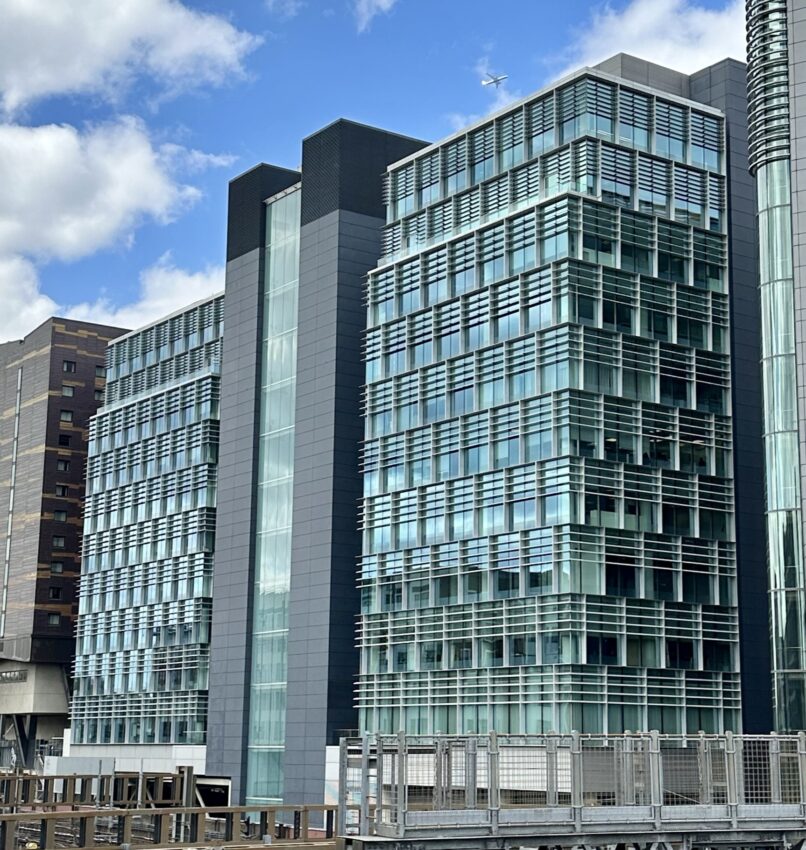
What is a FRAEW (Fire Risk Appraisal of External Walls)?

Façade Consultants

A FRAEW survey is a specialist appraisal of external wall fire risk that evaluates how a building’s cladding, insulation and façade systems might affect fire spread, and whether any remediation or safety measures are needed to keep occupants safe. They vary in scope depending on the building’s construction and level of risk.

Where materials are clearly identifiable or the quantity of combustible products is so small as to be discounted, a simpler appraisal may be sufficient. More complex or potentially combustible external wall systems require a more detailed survey using PAS 9980, which considers construction materials, design, installation quality and any combustible elements to determine the overall level of fire risk.

Once completed, a structured, evidence-based FRAEW report sets out the findings and proportionate recommendations. To learn more about what a FRAEW survey provides, contact us directly for more information.

Get in touch for more information
fraew survey drawing

When is a FRAEW required?

Façade Consultants
close up of combustible cladding during a FRAEW survey

A FRAEW survey is required when the standard fire risk assessment cannot determine the level of risk from a building’s external walls, such as where fire could spread over or within the external wall system.

A FRAEW may be required when:

  • Combustible or potentially combustible cladding, insulation, or façade materials are present, or their fire performance is uncertain
  • External wall materials, detailing, or recent over-cladding / refurbishment works are unclear, unverified, or poorly documented
  • The wall construction is atypical, mixed, or visually complex, making fire behaviour difficult to determine
  • Balconies, spandrel panels, infill panels, or other attachments may support external fire or smoke spread
  • There is evidence of defects, deterioration, water ingress, or performance issues affecting the external wall system
  • Similar buildings of the same design or construction have experienced cladding or façade fire safety issues
  • Lenders, insurers, valuers, or funding bodies require a PAS 9980-aligned FRAEW assessment for lending, insurance, or remediation applications

A FRAEW survey is generally not required when:

  • The external walls are constructed from materials known to be non-combustible (e.g. solid masonry, concrete or traditional brickwork)
  • There are no cladding, external wall insulation or other façade products that could contribute to fire spread
  • Construction documentation clearly confirms that all external wall materials are limited combustibility products
  • Balconies, spandrel panels or attachments are constructed entirely from non-combustible materials
  • The building is very low-rise, with simple, conventional construction and no fire-risk-relevant external wall features
Get in touch

Our FRAEW Survey Process

Façade Consultants

Our FRAEW survey process is designed to deliver a clear, reliable and evidence-based external wall fire risk assessment for each building we assess. Our structured approach is guided by FRAEW PAS 9980:2022, the code of practice for assessing external wall systems. Below, we outline our five-step approach, ensuring each FRAEW report accurately reflects the construction and performance of your building.

Step 1: Review available information

Reviewing relevant drawings, specifications, Operations & Maintenance manuals, certificates and previous inspection reports allows us to understand the building’s external wall construction, identify missing or inconsistent information and define the scope of the survey. We will also conduct an initial visual survey to confirm the different external wall types and the best way to gain access for more detailed inspection.

Following this, we work with our Fire Engineer to prepare a Proposed Intrusive Inspection Locations Report setting out the proposed inspection locations and explaining the investigation and making-good process, with examples of completed works.


Step 2: Conduct a detailed site inspection

To confirm the actual construction of the building matches the documentation, a full visual inspection takes place.  This includes cladding, insulation, balconies, spandrel panels, penetrations and junctions and may include:

  • Opening up small areas to confirm the wall build-up
  • Checking for cavity barriers, fire stopping and correct installation
  • Sampling materials for combustibility or fire classification testing
  • Documenting findings for inclusion in the FRAEW report

If this inspection confirms minimal combustible material, further assessment may not be needed. 


Step 3: Undertake intrusive investigations (where required)

If materials can’t be confirmed visually, or there are discrepancies, undocumented materials or missing fire protection measures, additional opening-up may be required with further sampling or testing. The extent of this work depends on:

  • Quality of documentation
  • Building size and complexity
  • Number of external wall types
  • Accessibility for safe inspection
  • Findings from initial opening-up

All intrusive work is planned to minimise impact on residents and coordinated with relevant parties in advance.


Step 4: Assess materials and fire performance

The information gathered allows us to evaluate:

  • The fire behaviour of materials and products
  • Reaction-to-fire classifications
  • Material performance or calorific potential
  • Integrity and condition of cavity barriers and fire stopping
  • The construction method and installation quality
  • Compatibility between materials and systems

Additional laboratory testing provides clarity where product substitution or undocumented changes have occurred.


Step 5: Identify and evaluate risk factors

Using the relevant guidance, including PAS 9980, for detailed assessments, we analyse:

  • Likelihood of fire spreading over or within the external walls
  • How façade elements may affect evacuation or stay-put strategies
  • The combined effect of changes to the design intent
  • The relative importance of each risk factor based on professional judgement
  • This stage determines whether remediation, mitigation or further investigation is needed.


Step 6: Prepare a structured FRAEW report

You receive a clear, evidence-based FRAEW report that includes:

  • full findings from the inspection
  • photographs and construction details
  • overall fire risk rating
  • construction defects or concerns
  • proportionate recommendations
  • whether remediation, further investigation or interim measures are required
  • confirmation of assessor competency and the methodology used


Support with remedial works

If remediation is needed, we can guide you through this process too, with design, detailing and project management of works.

Send an enquiry

How much does a FRAEW survey cost?

Façade Consultants

The cost of a FRAEW survey varies depending on the size, complexity and construction of the building. Our external wall appraisals start from £9,950 with final costs tailored to the level of inspection and analysis required.

Several factors influence the overall price of a FRAEW, including:

  • Building size and height
  • Number and complexity of external wall types 
  • Quality of existing documentation
  • Accessibility 
  • Extent of intrusive inspections 
  • Laboratory testing requirements 

Once we understand the building and the level of assessment required, we provide a clear, itemised proposal so you know exactly what is included in your FRAEW assessment and report. Contact us for a personalised quote.

fraew risk assessment of external wall

Latest Projects

Façade Consultants

Look at the projects we have been involved with.

Façade Condition Survey – Police Headquarters, Kent

Find out more

Offices London Fire Risk Appraisal External Walls

Find out more

Offices London Facade Condition Survey

Find out more

View All Projects

Why choose Barry Jubb Associates?

Façade Consultants

When you need a reliable FRAEW survey, experience and judgement matter. Our team brings over 40 years’ experience in the façade industry, working on a wide range of building types, from high-rise commercial developments to HMOs. 

All our external wall fire risk assessments are undertaken or overseen by a Dual Chartered Engineer, Institute Fellow who is also a member of the Institute of Fire Engineers (IFE). This represents the highest level of professional qualification and reflects our commitment to delivering clear and comprehensive reports. 

FRAEW services across London and the UK

We provide FRAEW services across London, the Midlands, the South of England and further afield, delivering both basic and detailed assessments.

Our clients include private landlords, housing associations, managing agents and developers.  

A tailored, proportionate approach

Every building is different. We tailor our inspection and reporting to the specific construction, documentation and risk factors involved, ensuring a clear, evidence-based FRAEW report without unnecessary disruption. Where remediation is needed, our specialists can support the next steps.

Learn more about Barry Jubb Associates

Comments From Our Customers

Façade Consultants
  • Really appreciate the work you have done on project so far.

    Henrietta Horton

    Senior Consultant

    Buro Happold

  • Many thanks for all your assistance on the project.

    John Clarkson

    Design Manager

    Kingerlee Ltd

  • Thanks for this Barry, just had a quick read through and it’s very thorough – a great report so thank you!

    Emma Swan

    Facilities Manager

    Jones Lang LaSalle

  • Thanks Barry for looking after our interests.

    Sunil Kansagra

FRAEW Frequently Asked Questions

Façade Consultants

What is the difference between a FRAEW and a EWS1?

A FRAEW is a fire risk appraisal of a building’s external wall system. An EWS1 form is a lender’s form used only for mortgage valuation.

Do all buildings need a FRAEW?

No. A FRAEW is only required when the standard fire risk assessment cannot determine the risk from the building’s external walls. This usually applies where combustible materials may be present, documentation is unclear, or the wall build-up cannot be confirmed visually.

Low-risk buildings with clearly non-combustible construction may not need a FRAEW.

What is included in a FRAEW report?

A FRAEW report sets out:

  • findings from the FRAEW survey
  • details of the external wall build-up
  • materials identified and any samples taken
  • intrusive inspection locations
  • presence and condition of cavity barriers and fire stopping
  • differences between design drawings and as-built construction
  • photographs, plans and evidence
  • the overall fire risk rating
  • proportionate recommendations

It provides all the information needed to understand and manage external wall fire risk.

How long does a FRAEW take?

A FRAEW survey typically takes from a few days to several weeks depending on:

  • building size
  • number of external wall types
  • accessibility
  • extent of intrusive inspection
  • whether laboratory testing is required

The final FRAEW report is usually issued shortly after all inspection and testing is complete.

What happens after a FRAEW identifies “high risk”?

If a FRAEW identifies a high level of fire risk, the report will outline recommendations. These may include:

  • immediate interim measures such as closing higher-risk areas or reviewing emergency arrangements
  • improvements to fire safety management
  • further investigation, sampling or testing
  • remediation or replacement of cladding, insulation or fire barriers

We can support you with the next steps, including façade remediation design and project management. 

Can a FRAEW replace an EWS1 form or vice versa?

No. A FRAEW cannot replace an EWS1 form, and an EWS1 cannot replace a FRAEW.  However, a FRAEW may provide the technical evidence needed for a professional to complete an EWS1.

EWS1 forms are for mortgage purposes; FRAEWs are fire risk assessments.

Can you do a FRAEW for low-rise buildings?

Yes. A FRAEW can be carried out on low-rise buildings where the fire risk from external walls cannot be confirmed through a standard fire risk assessment.  Some low-rise buildings need only a simple appraisal, while others may require more detailed investigation depending on the construction and materials used.

How quickly can we get a FRAEW survey?

We can usually begin a FRAEW survey within [insert timeframe], depending on access arrangements and any intrusive inspection requirements.  Once we understand the building’s scope and documentation, we will provide a clear programme and delivery timescale.

Arrange Your FRAEW survey today

Get the expert FRAEW assistance you need to assess your external wall system and stay compliant. 

We’ll guide you through the process and give you clear next steps, practical advice and a structured FRAEW report you can rely on. To discuss your project or request a quote, contact us today:

Or submit an enquiry through our contact page.

©2021 Barry Jubb Associates. All Rights Reserved | Made by JKE Web Design